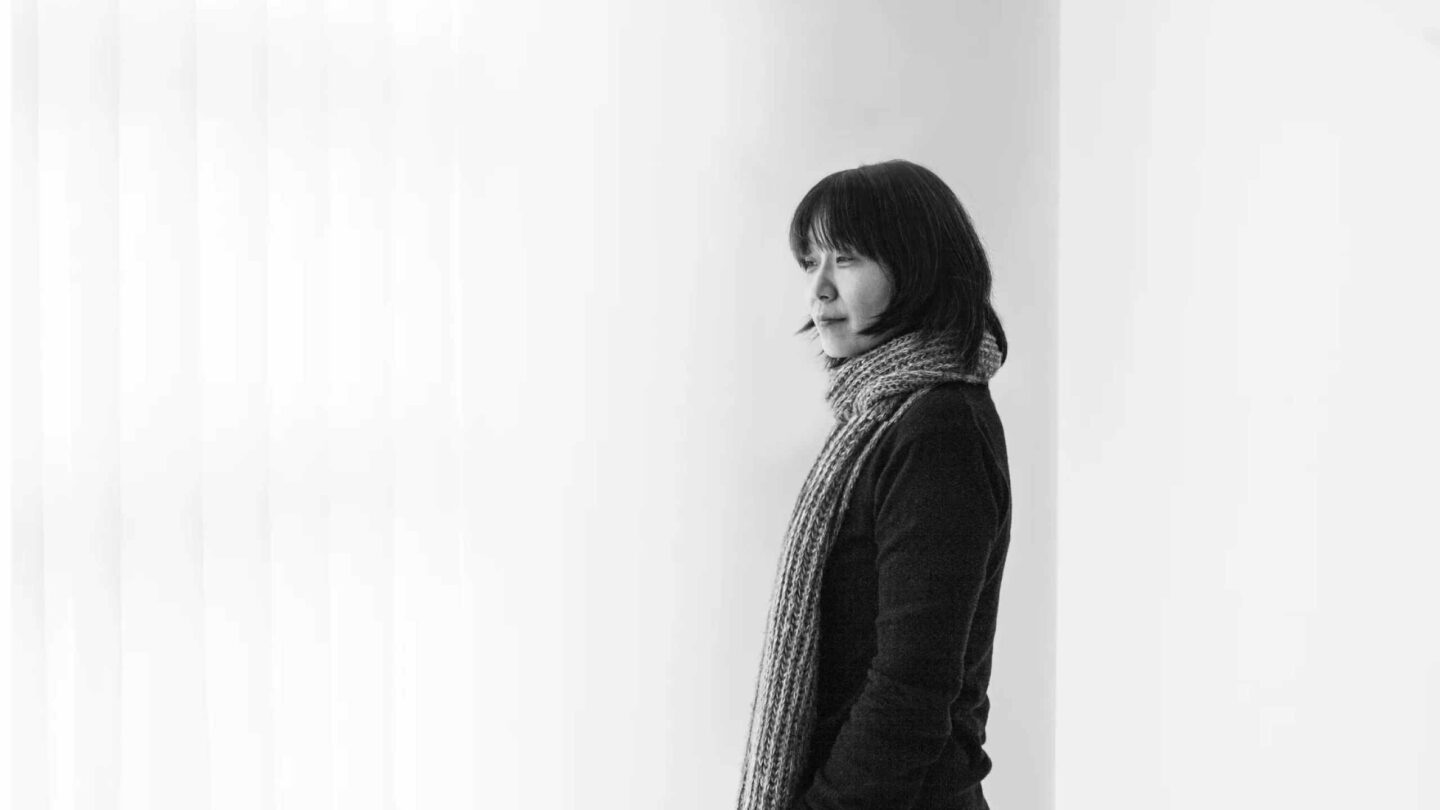
Han Kang is an author who was born in Gwangju, South Korea, in 1970. She is one of the most significant contemporary Korean writers and was awarded the Nobel Prize in Literature in 2024 “for her intense poetic prose that confronts historical traumas and exposes the fragility of human life.”
Her literary career began in 1993 with the publication of poetry, followed by her first novel in 1994. She gained international recognition with Chaesikju-uija (2007; Eng. The Vegetarian, tr. Deborah Smith, 2015), the story of a young woman who, by deciding to become a vegetarian, rebels against her family and the patriarchal structures of her society. For the novel, Han became the first South Korean to win the International Booker Prize in 2016. In Sonyeoni onda (2014; Eng. Human Acts, tr. Deborah Smith, 2016), she depicts the massacre of students in her home city of Gwangju in 1980, probing the question of how such extreme violence can be prevented. Her autobiographically inflected The White Book (2016; Eng. tr. Deborah Smith, 2017) gathers, alongside black-and-white photographs, fragments of text organised around the colour white and around the author’s late sister; grief and the resilience of life are its central themes. Most recently, We Do Not Part (2021; Eng. tr. e. yaewon and Paige Aniyah Morris, 2025) appeared, for which Han received, among other honours, the Prix Médicis étranger. In Light and Thread (2025; Eng. tr. e. yaewon, Maya West and Paige Aniyah Morris, 2026), she brings together diary entries, poems and her Nobel lecture, in which she asks what love means for community. Han’s work has appeared in more than 40 languages and has received numerous international awards.
In her home country, the author has received several honours, including the Korean Novel Award and the Yi Sang Literary Award in 1999. She taught creative writing at the Seoul Institute of the Arts for ten years. Today she works as a full-time writer.
Last Update: 2026
